How participatory RCS empower Filipino farmers to reduce post-harvest losses
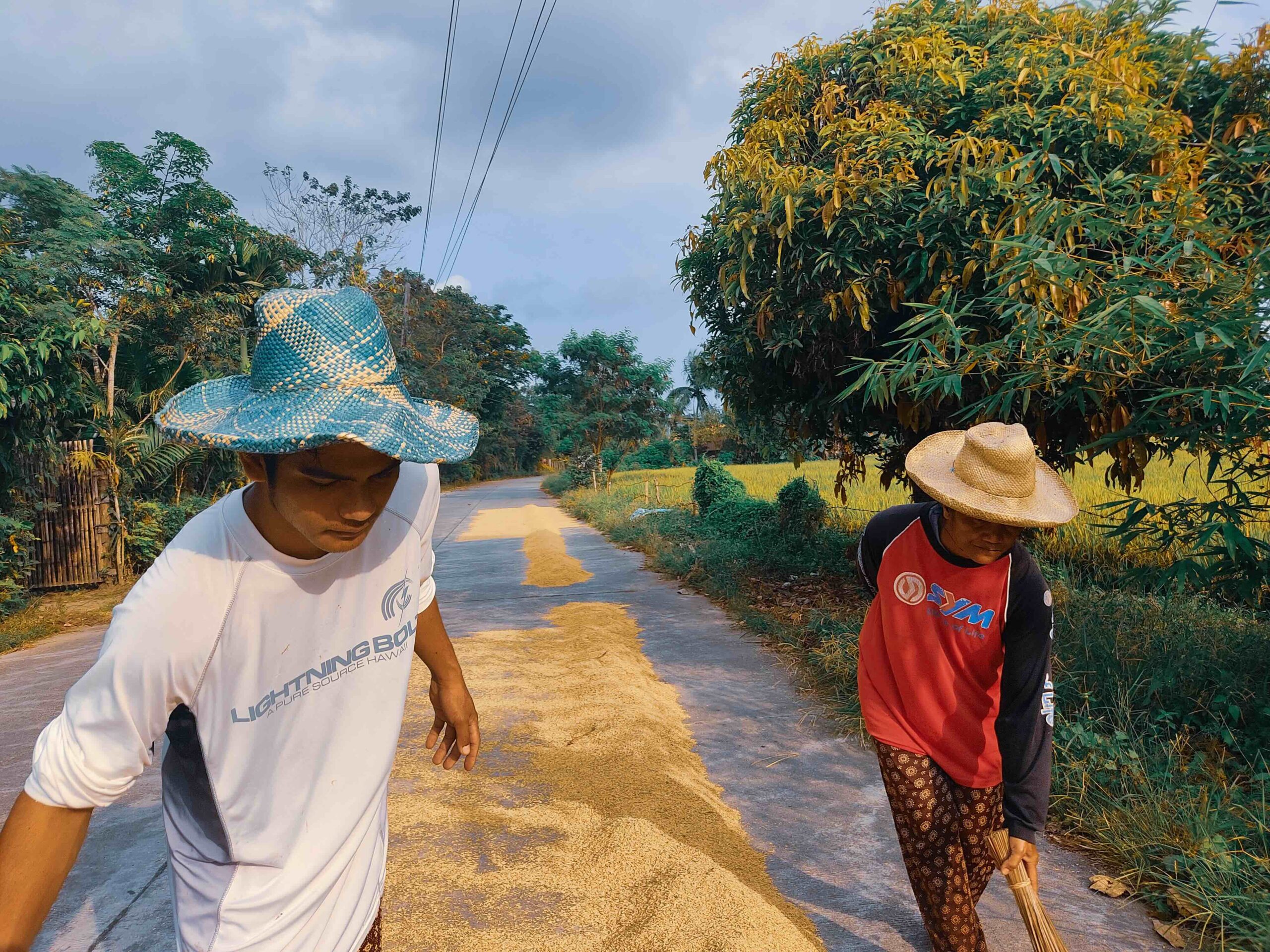
As climate change continues to pose significant challenges to traditional drying practices in the Philippine rice farming landscape, the adoption of mechanical drying solutions like flatbed dryers emerges as a crucial response to reducing post-harvest losses (Malanon and Sumalde, 2022). Beyond this technology, its effectiveness largely depends on the farmers’ accessibility to knowledge, where Rural Communication Services (RCS) serves as a critical bridge: providing farmers with equitable access to information and peer learning.
A recent study conducted by Vallejo and Torres (2022) in the farming community of Sto. Domingo, Nueva Ecija, Philippines, dives into this intersection, exploring how RCS, a tool to improve how knowledge is shared among farmers, actually influences whether and how farmers use flatbed dryers.
The study’s findings highlight the farmers’ transition from passive recipients to active learners. Demonstrated by the 74% of the 131 participants who reported that they passively receive agricultural information through various channels, primarily through the Municipal Agriculture Office (MAO), which accounts for 37%, while their actual use of the technology consists of experimentation to suit various conditions. It reveals the contradiction of the notion that they are passive users of new technologies.
While institutional sources like the MAO mostly provide the information to farmers, it is the community that serves as the primary knowledge-sharing platform to have a dialogue and sustain the technology’s practical use. The fact that 69% of respondents agree that cooperative assemblies contribute to peer and group learning highlights the importance of social networks in actively utilizing and appropriately adapting the available technology.
By identifying the sources and institutions from which farmers access information to support the “appropriation” of flatbed dryers, the process by which they learn and incorporate new tools into their farming routines, RCS can better design strategies that enable access to knowledge and ensure effective use of this innovation.
A successful utilization of mechanical solutions like flatbed dryers requires more than just technical delivery, it inevitably needs a multi-stakeholder approach involving the farming and agricultural community. In the context of development communication, RCS must pivot from a top-down approach towards a more participatory model where farmers are active partners in planning.
Key policy recommendations:
- Institutionalizing participatory RCS – Communication services should be co-planned and co-designed with farmers to ensure information is relevant to their specific economic conditions.
- Strengthening farmers’ organizations – Policies should encourage membership in cooperatives, as these groups act as a peer learning platform, enabling farmers to lobby and access relevant knowledge.
- Capacity Building: There is a need for farmers to receive financial and technical training to operate and manage the technology in its full capacity.
- Small-scale focused design: Technologies must be designed specifically for small-holding farmers to ensure they are not excluded by high operational costs or large-capacity requirements.
As the study concludes, it “takes a village” to appropriate technology. By enabling farmers with technological knowledge and skills and fostering collaborative learning, the Philippines can build a more mechanized and sustainable food system that reduces post-harvest losses.
Contributed by: Eduardo Salvador, ComDev Asia intern
Image credit: Asian Farmers’ Association (AFA)
References:
Malanon, H.G. & Sumalde, Z.M. (2022). Potential of Mechanical Grain Dryers in Addressing Exposure of Rice Farmers to Weather Risks. Philippine Agric Scientist, 105(4), 390-395. https://www.ukdr.uplb.edu.ph/cgi/viewcontent.cgi?article=1109&context=pas
Vallejo, C. A. N., & Torres, C. S. (2022). Rural Communication Services (RCS) and Appropriation of Flatbed Dryers among Farmers in Sto. Domingo, Nueva Ecija, Philippines. Asia-Pacific Journal of Rural Development, 32(1), 54-63. https://journals.sagepub.com/doi/10.1177/10185291221112206